It is very rare that a title warrants an exclamation mark, but today it does! We have two ways to share digitally and globally about our reading.
The first is contributing to our class slideshow about where and what we were reading over Spring break. I am sure you are excited to hear that I finished Lincoln in the Bardo and what fun places I got to read it in over break.
The second opportunity is to join an international bookclub. Liv, a tween reading enthusiast, has started a Padlet bookclub for The Mysterious Journey of Edward Tulane by Kate DiCamillo. Go to her padlet, read the instructions, and share your thinking with a world of reader.
Happy reading over break!
Showing posts with label Reading. Show all posts
Showing posts with label Reading. Show all posts
Friday, 23 March 2018

Friday, 15 December 2017
Holiday Reading Goals
Without practice, we lose the ability and skills! This is true of running, cooking, solving word problems, and of course, READING! Today 4HR had a read-in, where we practiced our stamina and enjoyed reading!


After reading for 30 minutes, we made a list of MUST Dos to help us read:
-Be open to new books and genres
-Pick Just Right books
-Finish reading most books you start
-Understand the book - make sense of what it says by recording our thinking
-Thinking about the words - use in the word, in the sentence, in the paragraph to help us understand unknown words
-Fluency! pay attention to punctuation
-Stamina - read for a long time
-Concentration - get hooked in
-Practice retelling
We then made goals! Some people made goals about how many books to read, or what kinds of books to read, or what kinds of strategies to use. What are your holiday reading goals?
Tuesday, 31 October 2017
Main Idea of Forces and Motion
Today we practiced finding the main idea vs topics of a book about our new unit, Forces and Motion.
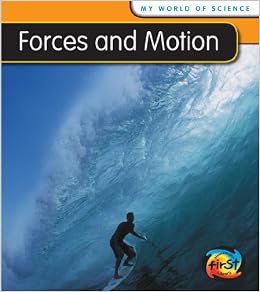
We took different sections of the book and found the main idea. Here is how you find the main idea:

Here is what we will learn about in our unit!
Wind and water are powerful natural forces that makes things move.
Force can make something change direction.
Friction is a force that affects movement.
Friction is a type of force that slows things down.
Pushing forward helps go faster.
Friction is when you rub against something and it slows you down.
Slope can be steep or flat.
Pulling back stops things from moving.
Finale! - Do we agree on the main idea of the last pages
Friction stops you from slipping. - fact
The more friction there is, the slower you go; the less friction there is, the faster you go. - statement
Friction affects how fast or slow something moves. - main idea!
Friction stops you from moving when you slip. - example
The less friction, the more you slide; the more there is, the more is stops you from slipping. - examples
If you are walking on a rough ground, friction will stop you from sliding; but if you are walking somewhere, like on ice, there is less friction because you will slide. - example
We took different sections of the book and found the main idea. Here is how you find the main idea:

Here is what we will learn about in our unit!
Wind and water are powerful natural forces that makes things move.
Force can make something change direction.
Friction is a force that affects movement.
Friction is a type of force that slows things down.
Pushing forward helps go faster.
Friction is when you rub against something and it slows you down.
Slope can be steep or flat.
Pulling back stops things from moving.
Finale! - Do we agree on the main idea of the last pages
Friction stops you from slipping. - fact
The more friction there is, the slower you go; the less friction there is, the faster you go. - statement
Friction affects how fast or slow something moves. - main idea!
Friction stops you from moving when you slip. - example
The less friction, the more you slide; the more there is, the more is stops you from slipping. - examples
If you are walking on a rough ground, friction will stop you from sliding; but if you are walking somewhere, like on ice, there is less friction because you will slide. - example
Thursday, 27 October 2016
Nonfiction Reading Strategies
Grade 4 has been working on developing our Nonfiction Reading Strategies. Our big foci have been word attack skills, interpreting visual information, determining main idea and detail, and merging information through synthesizing.
We have been collecting ThinkMarks aligned with this rubric throughout our Nonfiction reading unit. Now we are going to create a video explaining our thinking about Nonfiction texts and our great strategies with the world.
Tuesday, 11 October 2016
Hugo Cabret Visualizing

In Hugo's dark dark house, with Isabelle, they were glancing at the automaton. Their gaze was filled with excitement and shock. The automaton is leaning over the desk, with its pen, hovering over the piece of paper, in its hand. The automaton looks lifeless because its mask has no expression. It looks blank and has black eyes. The automaton looks so fragile and delicate.
Monday, 9 May 2016
Flipped Classroom!
4HR is learning about different geometric shapes and attributes. To help us get comfortable using the new vocabulary in class, let's practice at home.
For each concept, choose one way of finding out. Then, on Friday, bring in your Way to Show Your Learning.
All About Geometry
Watch BrainPop video
Glorious Geometry on Big Universe
Parallel and Perpendicular Lines
Watch BrainPop video
Stone Age Geometry: Lines on Big Universe
Line segment, Lines, Rays, and Points
Khan Academy tutorial
Lines Segments, Rays, and Angles on Big Universe
Angles: Acute, Obtuse, Right
Lines Segments, Rays, and Angles on Big Universe
Stone Age Geometry: Squares on Big Universe
Big Universe Log-in Information
Username: student panther apps
Ways to Show Your Learning
1) Go on a geometry hunt. Find at least 15 objects that demonstrate different geometric attributes (parallel & perpendicular lines; acute, right and obtuse angles; lines, line segments, rays, and points). In a Google Slide or poster, includ a picture or drawing and identify each attribute.
2) Draw a piece of Art: In your beautiful drawing, include the following geometric attributes (parallel & perpendicular lines; acute, right and obtuse angles; lines, line segments, rays, and points). Make sure to label all the attributes.
3) Brain Pop shape sorter: Sort the shapes. Take a screen shot or print final results to bring in on Friday.
4) Your choice: Talk to Ms. Rich before Wednesday to have your choice approved.
For each concept, choose one way of finding out. Then, on Friday, bring in your Way to Show Your Learning.
All About Geometry
Watch BrainPop video
Glorious Geometry on Big Universe
Parallel and Perpendicular Lines
Watch BrainPop video
Stone Age Geometry: Lines on Big Universe
Line segment, Lines, Rays, and Points
Khan Academy tutorial
Lines Segments, Rays, and Angles on Big Universe
Angles: Acute, Obtuse, Right
Lines Segments, Rays, and Angles on Big Universe
Stone Age Geometry: Squares on Big Universe
Big Universe Log-in Information
Username: student panther apps
Password: student panther apps
Group Username: libiskl
Ways to Show Your Learning
1) Go on a geometry hunt. Find at least 15 objects that demonstrate different geometric attributes (parallel & perpendicular lines; acute, right and obtuse angles; lines, line segments, rays, and points). In a Google Slide or poster, includ a picture or drawing and identify each attribute.
2) Draw a piece of Art: In your beautiful drawing, include the following geometric attributes (parallel & perpendicular lines; acute, right and obtuse angles; lines, line segments, rays, and points). Make sure to label all the attributes.
3) Brain Pop shape sorter: Sort the shapes. Take a screen shot or print final results to bring in on Friday.
4) Your choice: Talk to Ms. Rich before Wednesday to have your choice approved.
Friday, 15 April 2016
Kindness Fair
Today 4HR shared our projects about Kindness. We could respond to one of these three quotes from our class read aloud Wonder by R. J. Palacio.


How do we know we have been kind?
What is it to be kind, anyway?
Always try to be a little kinder than is necessary.
We had so many different responses: skits, essays, posters, presentations, books, and flip books.
What did we learn about kindness from the book Wonder and our opportunities to respond? Go to our individual blog to read our blog post reflections!
Monday, 22 February 2016
Consolidating Our Knowledge of the Rock Cycle
4HR got to experience the rock cycle last week in the Science Lab. This week we are going to review our learning and share it out! Use one (or more) of the resources below. Then pick one way to share your learning.
BrainPop Rock Cycle video
PowerScienceKnowledge
World Book
Options to show your learning
Share a rock cycle demonstration (ideas at PowerScienceKnowledge)
Take the BrainPop quiz (and email Ms. Heather your results)
Make a BrainPop idea map (and take a screenshot and add it your Google Drive)
Thursday, 29 October 2015
Visualizing Wonder
Today 4HR read a passage from Wonder by R.J. Palacio and stopped to envision. This strategy helped us to understand the main character, Auggie Pullman's, daily reality and empathize with his struggles.
"In the hallways, which were always crowded, my face would always surprise some unsuspecting kid who maybe hadn't heard about me. The kid would make the sound you make when you hold your breath before going underwater, a little "uh!" sound. This happened maybe four or five times a day for the first few weeks: on the stairs, in front of the lockers, in the library."
Here is what 4HR envisioned:
I can picture the kids in the hallway, with surprised and shocked looks on their faces. I can hear the gasping noises they make as Auggie walks by. I can picture Auggie walking in the hallway, head-down, speed walking to get to his classroom. All around him, I hear the thumping of his classmates shoes. I can feel him wishing to be ignored, and wanting to duck and cover his face.
What do you envision with this passage?
"In the hallways, which were always crowded, my face would always surprise some unsuspecting kid who maybe hadn't heard about me. The kid would make the sound you make when you hold your breath before going underwater, a little "uh!" sound. This happened maybe four or five times a day for the first few weeks: on the stairs, in front of the lockers, in the library."
Here is what 4HR envisioned:
I can picture the kids in the hallway, with surprised and shocked looks on their faces. I can hear the gasping noises they make as Auggie walks by. I can picture Auggie walking in the hallway, head-down, speed walking to get to his classroom. All around him, I hear the thumping of his classmates shoes. I can feel him wishing to be ignored, and wanting to duck and cover his face.
What do you envision with this passage?
Monday, 5 October 2015
Amazing, Awesome Story Endings
4HR has been discussing what makes an amazing, awesome, and exciting ending.
Here are examples:
"I wonder," said Jane.
Mark and Katharine didn't say anything, but they were wondering, too.
But it was a long time before the four children knew the answer."
-Half Magic by Edward Edgar
It was a bad ending because it sounded unfinished. The good part was the ending left it open for a sequel.
In his eyes shone the reflection of the most beautiful planet in the Universe - a planet that is not too hot and not too cold; that has liquid water on the surface and where the gravity is just right for human beings and the atmosphere is perfect for them to breathe; where there are mountains and deserts and oceans and islands and forests and trees and birds and plants and animals and insects and people - lots and lots of people.
Where there is life.
Some of it, possibly intelligent.
-Geoge's Cosmic Treasure Hunt by Lucy and Stephen Hawkins
There is a lot of Show Don't Tell in this ending. The author describes this new planet with lots of words. It could have a sequel.
Then together they began to read. They read stories about birds flying north in the spring. They read about picnics in the warm sun. And they read about Buster, the lucky dog who found his bone under the lilac bush.
-Rocket Learns to Read by Tad Hills
This is a cute ending. It matches the book and fits the story perfectly.
Meanwhile Elna opened her box of Cracker Jacks and inside she found... a real diamond ring.
- Meanwhile Back at the Ranch by Trinka Hakes Noble
The ending doesn't tell you important information. There wasn't any Show Don't Tell and the ending wasn't creative. What happens next? It is unanswered. The good part is that the ending isn't too long or too short. It is also a surprise.
Now for homework, you will write a blog post about an amazing, awesome, and exciting ending. Make sure to quote the book, provide the title and author, and explain why it is a good or bad ending.
Here are examples:
"I wonder," said Jane.
Mark and Katharine didn't say anything, but they were wondering, too.
But it was a long time before the four children knew the answer."
-Half Magic by Edward Edgar
It was a bad ending because it sounded unfinished. The good part was the ending left it open for a sequel.
In his eyes shone the reflection of the most beautiful planet in the Universe - a planet that is not too hot and not too cold; that has liquid water on the surface and where the gravity is just right for human beings and the atmosphere is perfect for them to breathe; where there are mountains and deserts and oceans and islands and forests and trees and birds and plants and animals and insects and people - lots and lots of people.
Where there is life.
Some of it, possibly intelligent.
-Geoge's Cosmic Treasure Hunt by Lucy and Stephen Hawkins
There is a lot of Show Don't Tell in this ending. The author describes this new planet with lots of words. It could have a sequel.
Then together they began to read. They read stories about birds flying north in the spring. They read about picnics in the warm sun. And they read about Buster, the lucky dog who found his bone under the lilac bush.
-Rocket Learns to Read by Tad Hills
This is a cute ending. It matches the book and fits the story perfectly.
Meanwhile Elna opened her box of Cracker Jacks and inside she found... a real diamond ring.
- Meanwhile Back at the Ranch by Trinka Hakes Noble
The ending doesn't tell you important information. There wasn't any Show Don't Tell and the ending wasn't creative. What happens next? It is unanswered. The good part is that the ending isn't too long or too short. It is also a surprise.
Now for homework, you will write a blog post about an amazing, awesome, and exciting ending. Make sure to quote the book, provide the title and author, and explain why it is a good or bad ending.
Subscribe to:
Posts (Atom)
Popular Posts
-
The Size of the Whole Matters - what does this mean to you? Here are some of our classmates' thinking about why the size of the whol...
-
Grade 4 Camp is a wrap! We learned so much about leadership, communication, and collaboration. To see all the action, go to Google Photos . ...
-
Grade 4 is getting ready to shine! Part of our performance will be an acoustic version of "The Greatest Love of All" by Whitney Ho...


