This week 4HR has been scientific journalists. We wanted to find out more from a first hand source about our research topic.
"It was interesting because I had never interviewed a person who had been on an active volcano." - Jenna
"It made me understand how other people felt and how things can get damaged." - Sophia
"I never knew how fast an avalanche falls." - Gregorio
"Now I know what it looks like and sounds like for a volcanic eruption." - Alice
Below are four interviews: Ms. Amy about a volcanic eruption in Indonesia, Ms. Stone about an earthquake in California, Ms. Heather O about the 2004 tsunami, and Mr. Wakefield about an avalanche in Colorado.
Showing posts with label Learn Enthusiastically. Show all posts
Showing posts with label Learn Enthusiastically. Show all posts
Sunday, 8 April 2018

Tuesday, 5 December 2017
Rosie Revere, Engineer
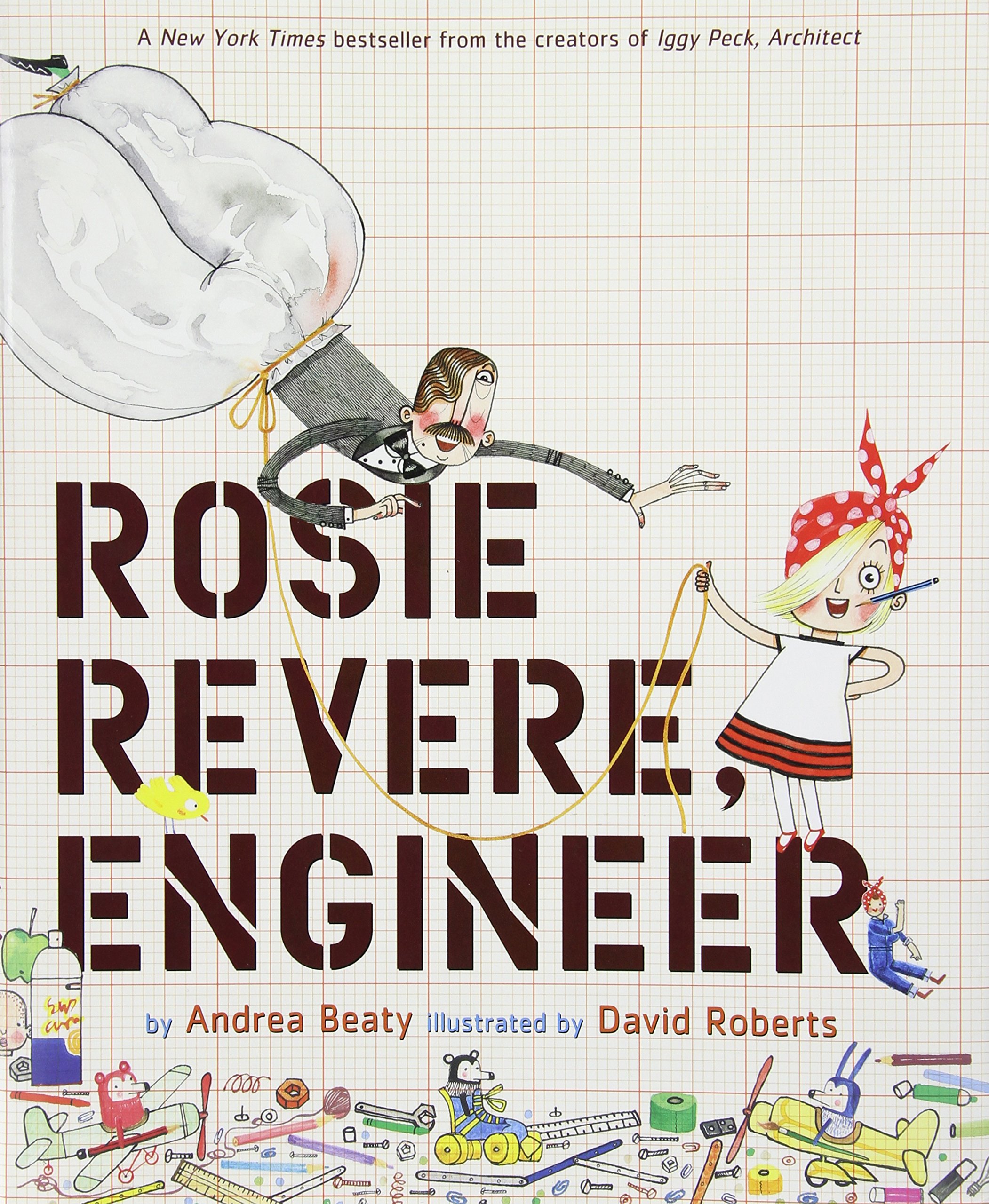
As 4HR gets ready to go into the Makerspace to create our designs to solve real world problems, we read the story of Rosie Revere, Engineer. It is the story of a young problem solver, who doubts her engineering abilities.
We thought the author's message was:
Never quit!
Keep trying.
It is good to make mistakes, because then your brain will grow.
Failure is a good thing.
She needs to fail to make her design better.
Let's keep these positive attitudes as head into the Makerspace.


Wednesday, 22 November 2017
State of Narrative Prose
In your Writer's Notebook, write down
Connect - What was one thing that David Handler says that you connect to?
Extend - What was one thing that extends your thinking?
Challenge - What was one thing that challenges you?
Monday, 13 November 2017
Investigations into Motion & Energy
We are going to begin our experiments as scientists do: by asking questions! Let's watch this video, and record as a class: What do you notice? What do you wonder?
Our questions:
What are they?
Are they magnets?
Is some one controlling them? Did they add anything? Did some one push them?
What makes them let go from the wood? Why is there a piece of wood?
Is the string bouncey/strong or weak?
Why did they change directions when they started? How do they change directions?
Why did they change patterns?
Why did the gaps get bigger?
Does it have to do with friction?
What kind of force does it have?
Do they weigh the same? Is the balls heavy or light or the same?
We then identified three variables to test: mass of object (example, a bowling ball vs a tennis ball), the release position (90 degree vs 45 degree) and the length of the string. We made predictions as to what impacted the movement of the pendulum (or the number of swings). Ask 4HR to find out what our results were!
Claim - Evidence - Reason
The release position affected the motion of the pendulum (number of swings) - no data supports this claim.
The mass of the fob affected the motion of the pendulum (number of swings) - no data supports this claim.
The length of the string affected the motion of the pendulum (number of swings)
-If the string is longer,
-The shorter the string, the more swings the pendulum completes. For example, when the string is 20 cm long, it completes about 18 swings. When the string is 38 cm long, it completes about 12 swings. But when the string is 15 cm long, it completes 17 swings. This information doesn't support our claim. We need to complete more testing to be more sure.
Our questions:
What are they?
Are they magnets?
Is some one controlling them? Did they add anything? Did some one push them?
What makes them let go from the wood? Why is there a piece of wood?
Is the string bouncey/strong or weak?
Why did they change directions when they started? How do they change directions?
Why did they change patterns?
Why did the gaps get bigger?
Does it have to do with friction?
What kind of force does it have?
Do they weigh the same? Is the balls heavy or light or the same?
We then identified three variables to test: mass of object (example, a bowling ball vs a tennis ball), the release position (90 degree vs 45 degree) and the length of the string. We made predictions as to what impacted the movement of the pendulum (or the number of swings). Ask 4HR to find out what our results were!
Claim - Evidence - Reason
The release position affected the motion of the pendulum (number of swings) - no data supports this claim.
The mass of the fob affected the motion of the pendulum (number of swings) - no data supports this claim.
The length of the string affected the motion of the pendulum (number of swings)
-If the string is longer,
-The shorter the string, the more swings the pendulum completes. For example, when the string is 20 cm long, it completes about 18 swings. When the string is 38 cm long, it completes about 12 swings. But when the string is 15 cm long, it completes 17 swings. This information doesn't support our claim. We need to complete more testing to be more sure.
Tuesday, 31 October 2017
Main Idea of Forces and Motion
Today we practiced finding the main idea vs topics of a book about our new unit, Forces and Motion.
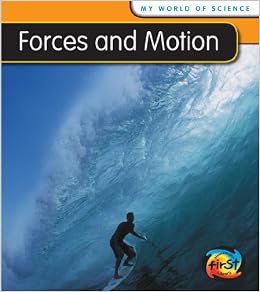
We took different sections of the book and found the main idea. Here is how you find the main idea:

Here is what we will learn about in our unit!
Wind and water are powerful natural forces that makes things move.
Force can make something change direction.
Friction is a force that affects movement.
Friction is a type of force that slows things down.
Pushing forward helps go faster.
Friction is when you rub against something and it slows you down.
Slope can be steep or flat.
Pulling back stops things from moving.
Finale! - Do we agree on the main idea of the last pages
Friction stops you from slipping. - fact
The more friction there is, the slower you go; the less friction there is, the faster you go. - statement
Friction affects how fast or slow something moves. - main idea!
Friction stops you from moving when you slip. - example
The less friction, the more you slide; the more there is, the more is stops you from slipping. - examples
If you are walking on a rough ground, friction will stop you from sliding; but if you are walking somewhere, like on ice, there is less friction because you will slide. - example
We took different sections of the book and found the main idea. Here is how you find the main idea:

Here is what we will learn about in our unit!
Wind and water are powerful natural forces that makes things move.
Force can make something change direction.
Friction is a force that affects movement.
Friction is a type of force that slows things down.
Pushing forward helps go faster.
Friction is when you rub against something and it slows you down.
Slope can be steep or flat.
Pulling back stops things from moving.
Finale! - Do we agree on the main idea of the last pages
Friction stops you from slipping. - fact
The more friction there is, the slower you go; the less friction there is, the faster you go. - statement
Friction affects how fast or slow something moves. - main idea!
Friction stops you from moving when you slip. - example
The less friction, the more you slide; the more there is, the more is stops you from slipping. - examples
If you are walking on a rough ground, friction will stop you from sliding; but if you are walking somewhere, like on ice, there is less friction because you will slide. - example
Wednesday, 25 October 2017
Cultural Identity Presentations
4HR shared its cultural presentations with 4JK today. Linked here are all the photos of our sociologists sharing the cultural universals with their partners.


The students were expected to identify, describe and explain their cultural universals in their presentations. They then had to compare and contrast their cultural universals with another student. This is guiding us to become global citizens, in understanding more about ourselves and others.
Monday, 29 May 2017
Building Our Own Seismograph
4HR is building seismographs that are affordable, accurate, and sensitive for countries that can't afford fancy computer seismographs. Our first step to collect information that will help us design accurate and sensitive machines.
Finding out:
Handout
What could be more accurate? What could be more sensitive?
What did we find out about seismographs? What are they made of?
Connects to base ten number system, in that the Richter scale works in powers of ten - Jamie
Steady and stable - Zaaviar
The paper would go around a wheel, with an axle in the middle. - Sarah
Wood plank needs to be smooth. Paper needs to be tight. - Connor
Platform: use cardboard. - Emily
Ink: when the paper keeps on moving, the writing instrument keeps writing. - Mason
The height of the weight and the weight of the weight. If the weight is super heavy, it wouldn't show small movements because it is held down. If it is lighter, it would show the smaller movements. - Sean
Vertical metal rod and steel wire. - Victoria
Platform: use cereal boxes, put something heavy in it. - Carmen
Platform: wood, because you can drill into it. - Amaan
Platform: tile. - Sean
Ball and pencil hung from rod. - Carol
Inverted pendulum seismometer: pencil suspended on a metal rod, adjusted to change the pendulum, so it can be more accurate. When the ground shakes, the pencil shakes, drawing on the paper. Wavelengths converted on the Richter Scale: lines on the paper. - ZY
You need a weight to make it stable. - Miguel
Measures how big the Earth's movement. - Elin
These seismographs connect to pendulums, except they don't move and stay in the same spot. It picks up the vibration of the surface, which causes the pencil or pen to move. - Caimi
What did we find out about seismographs? What are they made of?
Connects to base ten number system, in that the Richter scale works in powers of ten - Jamie
Steady and stable - Zaaviar
The paper would go around a wheel, with an axle in the middle. - Sarah
Wood plank needs to be smooth. Paper needs to be tight. - Connor
Platform: use cardboard. - Emily
Ink: when the paper keeps on moving, the writing instrument keeps writing. - Mason
The height of the weight and the weight of the weight. If the weight is super heavy, it wouldn't show small movements because it is held down. If it is lighter, it would show the smaller movements. - Sean
Vertical metal rod and steel wire. - Victoria
Platform: use cereal boxes, put something heavy in it. - Carmen
Platform: wood, because you can drill into it. - Amaan
Platform: tile. - Sean
Ball and pencil hung from rod. - Carol
Inverted pendulum seismometer: pencil suspended on a metal rod, adjusted to change the pendulum, so it can be more accurate. When the ground shakes, the pencil shakes, drawing on the paper. Wavelengths converted on the Richter Scale: lines on the paper. - ZY
You need a weight to make it stable. - Miguel
Measures how big the Earth's movement. - Elin
These seismographs connect to pendulums, except they don't move and stay in the same spot. It picks up the vibration of the surface, which causes the pencil or pen to move. - Caimi
Monday, 5 September 2016
Where Did Numbers Come From?
Today we are going to inquiry into how numbers came to exist. In your Mathematical Strategies notebook, title a page The Story of 1. Below, answer these questions:
Where did numbers come from?
How did humans start using numbers?
Where did numbers come from?
How did humans start using numbers?
Subscribe to:
Posts (Atom)
Popular Posts
-
The Size of the Whole Matters - what does this mean to you? Here are some of our classmates' thinking about why the size of the whol...
-
Grade 4 Camp is a wrap! We learned so much about leadership, communication, and collaboration. To see all the action, go to Google Photos . ...
-
Grade 4 is getting ready to shine! Part of our performance will be an acoustic version of "The Greatest Love of All" by Whitney Ho...


